
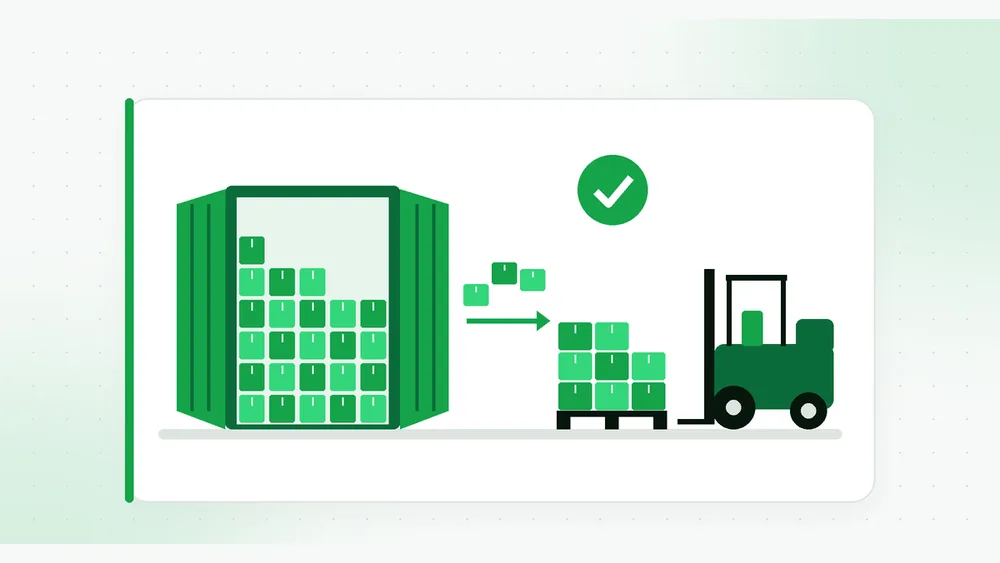
Container unloading, also called devanning or container stripping, is taking freight out of an ocean container. RapidShips unloads floor-loaded and palletized containers at its dock in East Brunswick, NJ, then palletizes and wraps the cartons, stores them, cross-docks them or reloads them onto trucks. You get photos and a written record of the work. For a quote, send the container size, packing list and outbound plan.
What Container Unloading (Devanning) Is
Devanning is the unloading of freight from a shipping container at a warehouse dock; "container unloading" and "container stripping" mean the same thing. The opposite job, packing a container, is called stuffing or vanning.
How the unload runs depends on how the container was packed. A palletized container holds unit loads that come off as pallets. A floor-loaded container holds loose cartons stacked from floor to roof, so each carton is handled by hand and then built onto a pallet. Floor-loaded container unloading is the labor-heavy version, and it is where most of the questions about time and cost come from.
Unlike a lumper service, the unloading happens at our own dock, so the freight can go straight into palletizing, storage, a cross-dock or a container-to-trailer transload.
When You Need Container Unloading
- The container is floor-loaded and the receiver, warehouse or carrier needs palletized freight.
- The empty has to go back before per diem or detention starts to add up, but the freight is not ready to deliver.
- One container holds several SKUs, POs or destinations that need to be sorted before they move on.
- The receiver has pallet specs (pallet type, maximum height, labels, wrap) that the freight as loaded does not meet.
- The load shifted or was damaged and has to be checked and restacked.
Planning the unload?
The Freight Scope Builder turns the container details into a quote request the dock can price, and the container loading calculator estimates how many cartons or pallets fit in the box. If the container has to move today, start with the Freight Emergency Assistant.
Floor-Loaded vs. Palletized Containers: What Changes
Floor-loaded containers take longer and cost more to devan because every carton is handled by hand. Palletized containers unload faster but carry less freight.
| What changes | Floor-loaded | Palletized |
|---|---|---|
| How freight comes off | Carton by carton, by hand | Pallet by pallet |
| Palletizing after unloading | Needed if the next leg wants pallets | Usually only rewrap or rebuilds |
| Main time and cost driver | Carton count and carton weight | Pallet count and pallet condition |
| Typical damage risk | Crushed or collapsed carton stacks | Leaning, broken or shifted pallets |
For the full trade-off, including why shippers floor-load in the first place, read our guide to floor-loaded vs. palletized containers.
Common Problems at the Container Door
| Found when the doors open | What we do |
|---|---|
| Cartons fell or leaned against the doors | Photograph as found, unload carefully, restack onto pallets |
| Crushed or wet cartons | Photograph, set aside and flag to you before anything moves on |
| Piece count does not match the packing list | Note the overage or shortage and tell you |
| Mixed SKUs or POs loaded together | Sort and segregate by SKU, PO or destination |
| Broken or leaning pallets | Rebuild, rewrap and re-band the unit loads |
How Devanning Works at Our Dock
- Book a door. Send the container details and packing list; the dock confirms an appointment.
- Container arrives. It backs into one of our 3 dock doors, and its condition is photographed as the doors open.
- Unload. Pallets come off as unit loads; floor-loaded cartons are unloaded by hand.
- Check and sort. Freight is checked against your packing list and sorted by SKU, PO or destination. Damage is photographed and flagged to you.
- Palletize and prepare. Cartons are built onto pallets, wrapped, banded and labeled as the next leg requires.
- Store, cross-dock or reload. Pallets are staged in storage, moved across the dock, or loaded onto the outbound truck.
- Release the empty. The empty container is ready to go back, and you receive photos and a written record of the work.
What a Devanning Record Can Include
A devanning report is a written record of what came out of a container and what condition it was in. Every job here comes with photos and a written record of the work. There is no one standard format, so tell us which details you need when you book. These are the fields customers most often ask for:
| Field | Why customers ask for it |
|---|---|
| Container number and seal number | Ties the record to the shipment and shows the box arrived sealed |
| Piece count vs. packing list | Shows overages or shortages for the supplier or receiver |
| Damage noted, with photos | Supports a damage claim against the carrier or insurer |
| Pallet count out | Matches the outbound bill of lading or storage receipt |
If your receiver, insurer or customs broker has its own form, send it with the booking.
Palletizing After Unloading
Palletizing turns loose cartons from a floor-loaded container into stable unit loads, stacked by SKU where needed, then wrapped, banded and labeled. Tell us the pallet type, maximum pallet height and labeling your receiver requires, because those decide how the pallets are built and how many you end up with. If the freight is being reloaded, the pallet count also decides how much trailer space it needs; our 40-ft container vs. 53-ft trailer comparison works through the numbers.
How Long Does It Take to Unload a 40 ft Container?
It depends on the load, so the dock confirms timing when you book instead of quoting a standard figure. The main drivers are:
- Floor-loaded or palletized
- Carton count and carton weight
- How many SKUs or POs have to be sorted
- Whether cartons need palletizing, relabeling or rework
- How much damage or shifting there is behind the doors
A 40-foot high-cube holds more cartons than a standard 40, which adds handling time when it is floor-loaded.
What Drives Devanning Charges
Devanning charges are the fees for unloading freight from a shipping container, and they are quoted per container from the packing list. Container stripping fees and unloading rates follow the same drivers:
- Floor-loaded (hand unload) vs. palletized
- Carton count, carton weight and number of SKUs to sort
- Pallets, stretch wrap, banding and labels used
- Rework, storage days, or loading the outbound truck
For a line-by-line breakdown and what to compare between quotes, see what drives unloading and transloading costs.
After Unloading: Storage, Cross-Dock or Transload
Once the container is empty it can go back to the carrier, so its return no longer waits on the receiver's delivery appointment. Our explainer on demurrage vs. detention covers which charge runs when. The unloaded freight then goes one of three ways:
- Storage: pallets are held until the receiver has an appointment. See when short-term freight storage makes sense and our warehousing and staging service.
- Cross-dock: freight is sorted and moved straight to outbound trucks through our cross-docking service.
- Transload: freight is reloaded onto a 53-foot trailer or box trucks in one job.
If the Seal Is Broken or Cartons Are Damaged
Tell the dock before the container arrives if the seal is broken or does not match your paperwork, and don’t send the box until the cargo owner has authorized opening it: our guide to a broken or mismatched container seal covers who to notify first. Damage is photographed as found and flagged to you before the freight moves on, so it is on record for a claim. Our guide to damage found when a container is opened explains what to record and keep. Damaged unit loads can be rebuilt as part of the job; see how a damaged pallet gets rebuilt.
What to Send Before the Container Is Dispatched
- Container number and size (20', 40', 40' high-cube or 45'), floor-loaded or palletized
- Packing list: carton count, weights and dimensions, number of SKUs or POs
- What happens next: storage, cross-dock, reload to a trailer, or pickup
- Receiver requirements: pallet type, maximum height, labels, wrap
- Which devanning record fields you need
- Who is delivering the container and when, plus the last free day and empty-return deadline
Location: East Brunswick and the Port Newark–Elizabeth Corridor
The dock is at 25A Cotters Lane, East Brunswick, NJ 08816, in Middlesex County, about 30 road miles from Port Newark, not at the port. Containers reach it from the Port Newark–Elizabeth terminals and Port Liberty Bayonne via the New Jersey Turnpike. For each terminal’s official site and trucker page, see the Port Newark terminal guide; for congestion and road access around the port, see our Port Newark freight corridor guide.
Related Services
Freight guides for container unloading
Frequently Asked Questions
Is container stripping the same as devanning?
How long does it take to unload a 40 ft container?
What are devanning charges?
Can you unload a floor-loaded container and build pallets?
What is a devanning report?
Can you unload a container at night or on weekends?
Can the freight be stored after unloading so the empty goes back sooner?
What happens if cartons are damaged when the container doors open?
Do you pick up containers from the port, or does my drayage carrier deliver?
Are you a lumper service?
Contact RapidShips
Container on the way? Call the dock at 800-376-2808, email operations@rapidships.com, or send the packing list through the quote request form and we will confirm a door time and price for the unload.