
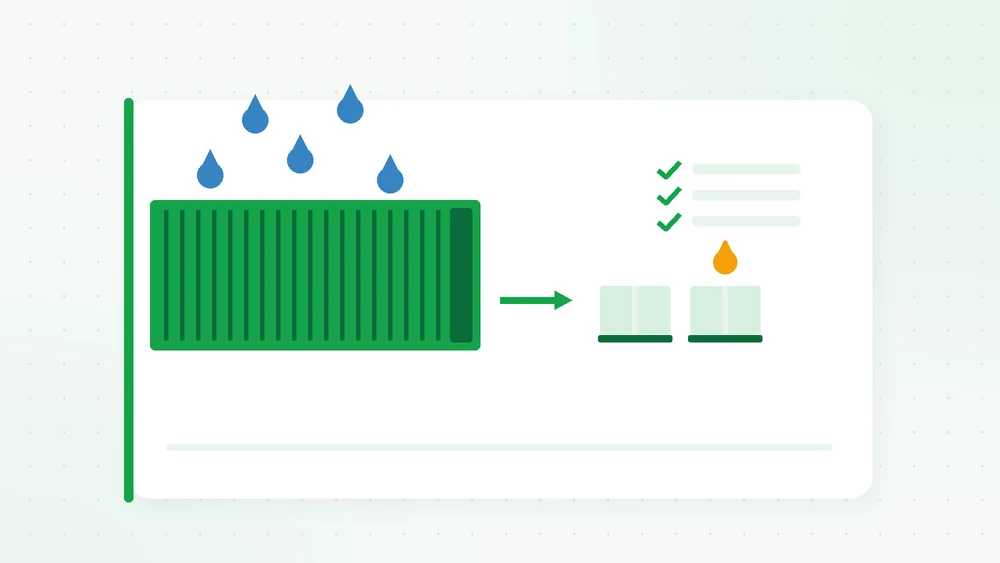
Make the area safe first, then stop more water from reaching dry freight. Photograph the container and the cargo before you move anything, and notify the carrier and your insurer. Then separate wet freight from dry, move dry pallets out of the box, and set wet goods aside where they can drain. Do not throw anything away until whoever is paying for the loss has had the chance to see it.
Water inside a sealed container usually comes from one of two places: a leak in the box, or moisture that was already inside and condensed on the way. The IMO’s informative material on container packing says a container is a closed box with its own micro climate, and that moisture in the goods, the packaging and any timber used for blocking may condense on the container walls, on the cargo or inside it during a long voyage.[1] Either way, what you do in the first hours matters. Wet cardboard keeps soaking up water, and the U.S. EPA advises drying water-damaged areas and items within 24 to 48 hours to prevent mold growth.[2]
In this guide
Key takeaways
- Photos come before forklifts. Record the box, the seal and the load as found.
- Separate wet from dry fast. Dry pallets sitting against wet ones keep getting wet.
- Do not dispose of freight until the carrier or insurer has had the chance to inspect it.
- Most container rain is preventable with dry packaging and dunnage, a checked box and, where needed, desiccants.
Leak or Condensation? Read the Pattern
Where the water is tells you a lot about where it came from. That matters for the claim, and it matters for fixing the problem on the next shipment. Write down what you see before anything is moved.
| What you see | Likely source | What to record |
|---|---|---|
| Wet tops of the top tier, drip marks, rust stains on the ceiling | Condensation on the roof dripping down (container rain), or a roof leak | Photos of the ceiling and roof panels, the wet pattern across the top tier |
| A wet patch in one spot, daylight visible from inside with the doors closed | A hole or crack in the roof or walls | Photos of the hole from inside and outside, its position in the box |
| Wet freight only near the doors, damaged door gaskets | Leak at the doors | Close photos of both door gaskets and locking gear |
| Bottom tier wet, water pooled on the floor, tide lines on cartons | Standing water: floor damage, flooding at a yard, or condensation collecting on the floor | Height of the tide line, the floor condition, any pooled water |
| Damp everywhere, sweat on the walls, musty smell, no single wet spot | Condensation from moisture already in the cargo, pallets or packaging | Condition of pallets and dunnage, whether goods are hygroscopic (paper, wood, textiles, food) |
Condensation is simple physics. The National Weather Service explains that the dew point is the temperature air must be cooled to in order to reach 100% relative humidity, and that if the air cools further, water vapor has to come out as liquid.[3] Inside a container the swings are large. The Container Handbook notes that sunshine can heat the air under the container’s inside surfaces far above the outside temperature, so the day and night cycle inside the box can be wider than outside, and that repeated cycles of cargo or container sweat can cause more damage.[4]
The source of the moisture is often the cargo itself. The IMO material lists timber bracing, pallets, porous packaging and packing in rain or very humid weather as sources, alongside the cargo.[1] Do not assume the carrier is at fault just because the freight is wet. Record what you see and let the surveyor or adjuster work out the cause.
Safety Before Anything Else
A wet container is a slippery, sometimes unstable work area. Before anyone walks in:
- Check for gases. The IMO material on testing containers for hazardous gases says the risk applies to warehouses, importers and anyone who opens and unpacks containers, and that gases can come from fumigation, from substances in the products or dunnage, or from processes in the cargo.[1] Wet organic cargo that has started to rot is one more reason to ventilate before entering.
- Open the doors with care. Soaked cartons lose strength and stacks lean. Freight that has shifted against the doors can fall when they open.
- Watch the floor. Water on the container floor and dock plate is a slip hazard for people and a traction problem for forklifts. Dry the dock area and mark it.
- Stop if the cargo is hazardous. If the freight is hazardous material, or anything that reacts with water, follow its safety data sheet and your emergency procedure. Leave it to people trained for it.
- Keep electrics clear. Keep extension cords, chargers and lights away from standing water.
First-Hours Checklist
Work through these in order. The point is to stop more damage without destroying the record of what arrived.
- Before opening: photograph the container number, the seal and the seal number, and the outside of the box, including the roof if you can see it safely. If the seal does not match, see what to do when a container seal is broken.
- As opened: photograph the load face from the doors, then the ceiling, walls, floor and door gaskets. Take a short video walking the length of the load if you can do it safely.
- Note on the delivery receipt: write a clear exception, such as wet or water-stained cartons, before the driver leaves. Your freight receiving checklist should already have a line for this.
- Notify early: tell the carrier, your forwarder or broker, and your cargo insurer the same day. Ask whether they want a surveyor to see the container before it is emptied. Notice rules and deadlines are covered in freight damage claims.
- Stop more water: if it is raining, get the box under cover or keep the doors toward the dock. Do not leave the doors open in the rain.
- Separate wet from dry: move dry pallets and cartons to a dry area away from the wet ones. Label each group.
- Stage wet freight to drain: put wet goods on clean, dry pallets, off the floor, with space between them for air. Do not shrink-wrap wet freight.
- Count and tag: keep a running count by SKU or purchase order of dry, wet but intact, and damaged. Photograph each wet pallet with its tag.
- Keep samples and packaging: hold damaged cartons, a sample of wet product and any desiccant bags found in the box. Do not throw them out yet.
- Check the empty: before the empty goes back, photograph the inside again. Closing the doors from inside and looking for daylight shows holes and gasket gaps, a method insurers recommend before packing.[5]
Triage Table: Situation, Do Now, Why
| Situation | Do now | Why |
|---|---|---|
| Only the top layer is damp or stained | Photograph, then devan. Move dry lower tiers out first if they can be reached safely. | The lower freight is probably fine, and every hour next to wet cartons raises the risk. |
| Water is still dripping from the roof | Get the box under cover or turn it away from the weather, photograph the leak, then unload. | A live leak keeps causing damage. Its location is key evidence. |
| Pallets are standing in water | Photograph the tide line, then lift the pallets onto dry pallets or a dry floor quickly. | Wet bottom cartons crush, so stacks lean and collapse. |
| Floor-loaded cartons are soaked and collapsing | Hand-unload carefully. Build dry cartons onto new pallets and set wet ones aside. | Soaked cartons cannot carry a stack. Rebuilding on sound pallets keeps the dry freight moving. |
| Musty smell or visible mold | Ventilate, limit handling, photograph, and ask your insurer or adjuster how to proceed. | Mold can be hard or impossible to remove from porous materials, according to EPA.[2] |
| The carrier or insurer wants a survey | Ask how long you can wait. Protect the freight from more water in the meantime. | A surveyor may want to see it as found, but waiting should not make the damage worse. |
| The cargo is hazardous, refrigerated or food | Follow the product’s safety and food-handling rules, and contact the shipper and insurer before handling. | These goods have their own handling and disposal rules. |
Keep It in the Container or Devan Now?
People often leave a wet container closed “so nobody touches the evidence”. That can make the loss bigger, because the box keeps the moisture in. Weigh both sides:
| Factor | Keep it in the container | Devan now |
|---|---|---|
| Evidence | The load stays exactly as found for a surveyor. | The as-found state lives only in your photos and notes, so take more than you think you need. |
| More damage | Wet freight sits in a closed, humid box. Damage can spread to dry cartons. | Dry freight is separated and wet freight can start to drain and dry. |
| Mold timing | The clock keeps running. EPA’s guidance is to dry wet items within 24 to 48 hours.[2] | Drying can start right away. |
| Equipment time | The container and chassis stay out, so free time and detention keep counting. | The empty can go back once it has been photographed and inspected. |
| Safety | Nobody has to work on a wet container floor yet. | Needs a careful unload plan for leaning stacks and wet floors. |
| Best when | A surveyor can come quickly, the freight is not getting worse, and the box is under cover. | Water is still spreading, dry freight can be saved, or no inspection can happen soon. |
In most cases the answer is a middle path. Photograph everything, tell the carrier and insurer you plan to unload to protect the cargo, then devan with photos at each stage. Keep the wet goods and packaging together and tagged so they can still be inspected. Ask your insurer before deciding; your policy may say what it expects.
Salvage, Rework or Dispose
Once the freight is out and sorted, each group needs a decision. That decision usually belongs to the cargo owner and the insurer, not the dock.
- Dry and undamaged: receive it into stock. Rebuild pallets where the base or wrap was soaked; see pallet rebuilding.
- Wet outer carton, dry product: often saved by re-boxing or relabeling once the product has been checked. Freight rework covers re-boxing and sorting.
- Product wet but possibly recoverable: metal parts, sealed goods or items in poly bags may be cleaned or dried. The insurer may want a salvage company to assess them.
- Porous goods that stayed wet or show mold: EPA notes that absorbent or porous materials may have to be thrown away if they become moldy.[2] Paper, textiles and some food usually fall here. Get written approval before disposal and keep photos and counts.
The IMO material lists the kinds of loss condensation can cause: corrosion, mildew, rot, fermentation, breakdown of cardboard packaging, staining and, for some cargoes, self-heating.[1] If wet bulk organic cargo feels warm, treat it as a safety problem and get expert advice.
An Illustrative Example
This is an illustrative scenario, not a real customer job. A 40-ft container of floor-loaded cartons of home goods arrives after a long voyage. When the doors open, the top two rows of cartons near the front wall are stained and soft, and rust-colored drip marks run across the ceiling. Lower rows feel dry. The receiver photographs the seal, the load face and the ceiling, notes “wet and stained cartons, top tiers” on the delivery receipt, and emails the carrier and the insurer with photos the same morning. The insurer agrees to unloading to protect the cargo. The crew hand-unloads from the doors, builds dry cartons onto new pallets, and stages wet cartons on separate pallets with tags by purchase order. Each pallet is photographed. A closed-door light check on the empty shows no daylight, which points toward condensation rather than a roof hole. The wet cartons are held for the adjuster, and the dry pallets go into stock.
How to Prevent It Next Time
Most of the fix happens at origin, before the doors close. Share these points with your supplier or packing agent. The CTU Code is the non-mandatory IMO, ILO and UNECE code of practice for packing containers and other cargo transport units, and it includes guidance for the people who pack and unpack them.[6]
- Pack dry. The IMO material says many condensation problems can be avoided by making sure packaging materials are dry at loading, and that film wraps can help.[1] Do not pack in the rain.
- Use dry pallets and dunnage. The Container Handbook quotes the packing guidelines: “Wet dunnage, pallets or packaging should not be used.”[4] Cargo, timber and pallets left outside before loading bring water into the box.
- Check the box before packing. If P&C Insurance recommends checking for holes or cracks in the walls and roof, making sure the doors work, and testing watertightness by closing the doors from inside and looking for light through cracks, holes or door gaskets. It also says the interior should be dry and the vents unblocked.[5]
- Use desiccants where the cargo needs them. The same insurer advises good ventilation and dehumidifiers for moisture-sensitive cargo, especially when large temperature swings are expected.[5] How much, and what type, depends on the cargo and route, so ask your packaging or desiccant supplier.
- Control the cargo’s own moisture. Hygroscopic goods such as paper, wood, textiles and many agricultural products take on water in humid air and release it when temperatures change. The IMO material says such goods should be pre-dried to a “container-dry” state.[1]
- Protect the goods, not just the carton. Poly bags, film wrap and moisture-resistant cartons help the product survive a wet outer box.
- Reject a bad box. If a container is damaged or dirty, the insurer’s advice is to reject it and ask for a replacement.[5]
On the receiving end, keep a short wet-cargo section in your dock procedure and in your container unloading process so the crew knows the steps before it happens.
Where RapidShips Fits
RapidShips is a warehouse-based 3PL at 25A Cotters Lane, East Brunswick, NJ, about 30 road miles from Port Newark, with 3 dock doors and dock operations 24/7 by appointment. If a container arrives wet, we can devan it, palletized or floor-loaded, with a photo record of the unloading, separate wet freight from dry, rebuild and restack pallets, and hold freight in short-term storage while you and your insurer decide what happens next. We are not a freight broker or customs broker, and we do not handle hazmat or refrigerated freight. For a problem load arriving soon, see freight emergencies or call 800-376-2808.
Frequently Asked Questions
What causes water damage inside a sealed shipping container?
Should I unload a wet container or leave it closed for the surveyor?
How quickly can mold grow on wet cargo?
Can I throw away water-damaged freight right away?
How do I prevent container rain on future shipments?
Sources
- International Maritime Organization (copy hosted by the Austrian Economic Chambers, WKO), "MSC.1/Circ.1498: Informative material related to the CTU Code," accessed October 2026.
- U.S. Environmental Protection Agency, "A Brief Guide to Mold, Moisture and Your Home," accessed October 2026.
- National Weather Service, "Dew Point vs Humidity," accessed October 2026.
- Container Handbook, "Section 2.3.8: Climatic stresses," accessed October 2026.
- If P&C Insurance, "Basic aspects of Container Transport (risk information, 8/2023)," accessed October 2026.
- International Maritime Organization, "IMO/ILO/UNECE Code of Practice for Packing of Cargo Transport Units (CTU Code)," accessed October 2026.
This guide is general operational information, not legal, insurance or claims advice. Your contract of carriage, insurance policy and the carrier’s terms decide what must be reported and when; check them, and talk to your insurer or claims adviser before you dispose of any freight.