
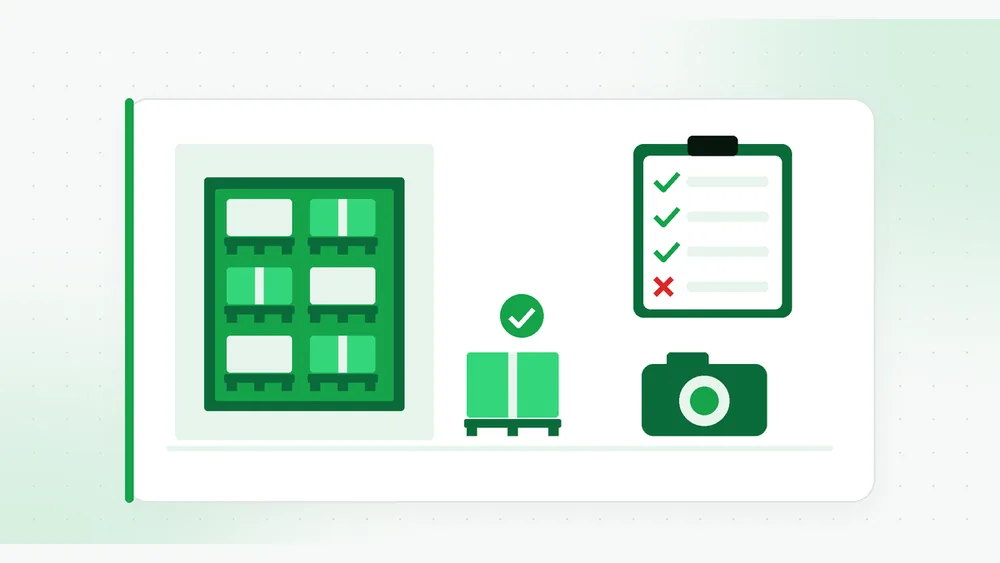
To receive freight correctly, check the paperwork and seal before the doors open, count every pallet or carton against the bill of lading and packing list, and inspect for damage while the driver is still there. Write specific exceptions on the delivery receipt before you sign, photograph every problem, keep damaged goods, and report overages, shortages and damage (OS&D) the same day.
A freight receiving checklist exists for one reason: the signature on the delivery receipt is evidence. A clean signature says the shipment arrived complete and in good order. Under the Carmack Amendment a motor carrier is liable for the actual loss or injury to property it carries,[1] but proving that loss starts with what the receiver wrote down at the door. A note on the delivery receipt is not itself a claim,[2] yet a receipt signed with no notes is hard to argue with later.
In this guide
- Before the truck arrives
- The freight receiving checklist
- Checking the seal and securing the trailer
- Counting and inspecting: pallets vs. cartons
- How to write exceptions on the delivery receipt
- After the driver leaves: OS&D and concealed damage
- Receiving import freight in New Jersey
- Frequently asked questions
Key takeaways
- Count what the bill of lading counts: pallets if it lists pallets, pieces if it lists pieces.
- Inspect and photograph before you sign, not after the truck leaves.
- Write specific exceptions: what, how many, which pallet.
- Report OS&D the same day and keep damaged goods until the carrier says otherwise.
Before the Truck Arrives
Receiving goes wrong most often when the dock doesn’t know what is coming. Before the appointment, pull together the documents that tell you what the shipment should look like:
- Purchase order and packing list. SKUs, carton counts and weights you will count against.
- Advance ship notice (ASN), if the shipper sends one: pallet count, labels and expected arrival.
- Bill of lading copy, if you can get it early. Federal rules require a motor carrier’s bill of lading to show the consignor and consignee, origin and destination, the number of packages, a description of the freight, and the weight, volume or measurement where it affects the rating.[3]
- A door, a crew and equipment booked for the appointment time, with space staged for the pallets.
- Special instructions: temperature, hazmat, a retailer’s pallet spec, or a seal number to check.
Use this tool: know the terms on the paperwork
The freight glossary defines every term that shows up on receiving paperwork, from bill of lading to OS&D. For a specific question about a delivery, the Freight Assistant answers from the site’s sourced guides and points to the right tool or page.
The Freight Receiving Checklist
A freight receiving checklist runs in five stages: paperwork, trailer and seal, unloading, inspection, and sign-off. The table is the short version; the sections below explain each check.
| Stage | Check | If it’s wrong |
|---|---|---|
| 1. Paperwork | Consignee, PO, piece or pallet count and description on the BOL match what you expect | Call the shipper or broker before unloading |
| 2. Trailer and seal | Seal number matches the paperwork; brakes set and wheels chocked | Stop: don’t cut the seal |
| 3. Unloading | Photograph the load as the doors open; unload one pallet at a time | Photograph leaning or broken pallets before moving them |
| 4. Inspection | Count against the BOL and packing list; check wrap, cartons, labels, wet marks | Set damaged freight aside, photograph it |
| 5. Sign-off | Exceptions written on the delivery receipt, driver signs or initials them | Don’t sign clean to save time |
Checking the Seal and Securing the Trailer
On a sealed trailer or container, check the seal before it is cut: CBP’s recommended seal procedures call for inspecting an inbound seal with a witness using the View, Verify, Tug and Twist method before cutting it.[4] Record the seal number on your receiving log. If the number doesn’t match or the seal is damaged, stop and follow the steps in our guide to a broken or mismatched container seal.
Before anyone drives a forklift into the trailer, OSHA requires the truck’s brakes to be set and wheel chocks placed under the rear wheels, and fixed jacks may be needed under a trailer that isn’t coupled to a tractor.[5] It also requires trailer floors to be checked for breaks and weakness before a forklift drives on.[5] Receiving an ocean container rather than a trailer? How to unload a shipping container covers door safety and ventilation.
Counting and Inspecting: Pallets vs. Cartons
Count what the bill of lading counts. If the BOL says 22 pallets, you are confirming 22 pallets arrived intact; if it lists 880 cartons, the carrier signed for 880 pieces and a carton count matters. Who loaded the freight changes what the carrier answers for: when the shipper loaded and the bill says “shipper’s weight, load, and count,” federal law lets the carrier avoid liability for goods that were never loaded or were misdescribed.[6] That is why a shipper load and count trailer puts more weight on your own count.
What to look for on each pallet
- Wrap: torn, cut or re-wrapped film (re-wrapping can hide a shortage).
- Shape: leaning, crushed corners, collapsed bottom tier, overhang.
- Pallet: broken deck boards or stringers.
- Cartons: punctures, crushing, water marks, re-taped seams.
- Labels: right PO and SKU, readable barcodes, pallet labels on the faces your receiver needs.
- Indicators: tripped tip or shock indicators, if the shipper used them.
If a pallet looks lighter or heavier than the paperwork says, weigh it before the driver leaves. Weight differences drive LTL reweigh and reclass bills; why an LTL shipment gets reclassified explains how, and the freight class and density calculator shows the class a pallet’s real dimensions and weight point to.
How to Write Exceptions on the Delivery Receipt
An exception is a specific written note on the delivery receipt or bill of lading describing a shortage, overage or damage found at delivery. Federal claim rules say such notations are not, standing alone, a claim,[2] but they are the record a claim is built on, so make them specific enough that someone who wasn’t at the dock can see what went wrong.
| Problem | Weak note | Specific note |
|---|---|---|
| Short one pallet | “Subject to count” | “21 of 22 pallets received, 1 pallet short” |
| Crushed cartons | “Damaged” | “Pallet 7: 6 cartons crushed on top tier, photos taken” |
| Wrap torn | “Possible damage” | “Pallet 3 wrap torn on 2 sides, cartons exposed” |
| Seal problem | “Seal issue” | “Seal on door 1234567, BOL shows 7654321” |
The seal numbers in the last row are made up to show the format. Have the driver sign or initial next to the exceptions, keep your copy, and photograph the signed receipt. What goes on the paperwork when freight is refused outright is covered in freight rejected by the receiver.
After the Driver Leaves: OS&D and Concealed Damage
OS&D stands for overages, shortages and damages: the internal report a receiver opens for anything that didn’t arrive as the paperwork said. Open it the same day, while the photos and the crew’s memory are fresh.
- Log it. BOL and PRO number, carrier, date, what is over, short or damaged, and the photos.
- Keep the damaged goods and packaging. The carrier may want to inspect them before anything is thrown out or reworked.
- Notify the carrier and the shipper in writing. The CTU Code also advises documenting damage found during unloading and notifying the carrier or container operator and the shipper.[7]
- Hold overages. Don’t put freight you didn’t order into stock; it belongs to someone else’s shipment.
- File a claim if there is a loss. A claim is a written communication that identifies the shipment, asserts liability and claims a specified or determinable amount.[2] Carriers may not set less than 9 months to file a claim or less than 2 years to sue.[1]
Concealed damage is damage inside intact packaging, found only when a carton is opened. Open and inspect freight promptly after delivery so concealed damage is found while it can still be tied to the trip. The freight damage claims guide covers concealed damage, salvage and the claim timelines in detail.
Freight arrived in bad shape?
If pallets arrived leaning, crushed or unsellable and the freight still has to move on, Freight Emergency Help walks through what happened and points to the next step, whether that is a restack, a relabel or a hold.
Receiving Import Freight in New Jersey
In New Jersey, a lot of inbound freight is import cargo that left the Port Newark–Elizabeth or Port Liberty Bayonne terminals only hours earlier, either still in the ocean container or reloaded onto a domestic trailer. The receiving checks are the same, with two additions: the container seal matters more, and the driver is often on a tight clock to return the chassis and empty. If a driver waits a long time at your door, who pays when a truck driver waits explains detention, and the Port Newark guide explains the port side of the move.
RapidShips receives freight at its own dock at 25A Cotters Lane, East Brunswick, NJ, with 3 dock doors and dock operations 24/7 by appointment. When a shipment arrives short, damaged or not to spec, we can photograph and count it, rebuild damaged pallets through freight rework, hold it in short-term storage while a claim or a new appointment is sorted out, or unload a container on the record through container unloading. Call 800-376-2808 or send the shipment details.
Frequently Asked Questions
What should you check when receiving freight?
Should I sign the bill of lading if freight is damaged?
What does OS&D mean in receiving?
Does writing “subject to count” protect the receiver?
What is concealed damage and how do I report it?
Sources
- Legal Information Institute, Cornell Law School, "49 U.S. Code § 14706 – Liability of carriers under receipts and bills of lading," accessed September 2026.
- Legal Information Institute, Cornell Law School, "49 CFR § 370.3 – Filing of claims," accessed September 2026.
- Legal Information Institute, Cornell Law School, "49 CFR § 373.101 – Motor carrier bills of lading," accessed September 2026.
- U.S. Customs and Border Protection, "Recommended Seal Procedures Including Best Practices," accessed September 2026.
- Legal Information Institute, Cornell Law School, "29 CFR § 1910.178 – Powered industrial trucks," accessed September 2026.
- Legal Information Institute, Cornell Law School, "49 U.S. Code § 80113 – Liability for nonreceipt, misdescription, and improper loading," accessed September 2026.
- International Labour Organization, "CTU Code: IMO/ILO/UNECE Code of Practice for Packing of Cargo Transport Units (2014), chapter 12," accessed September 2026.
This guide is general operational information, not legal advice. Claim rights depend on the bill of lading, the carrier’s tariff and the contract of carriage; ask your claims adviser or insurer about a specific shipment.